
sapro portal
Roles
UI / UX Designer
Product Owner
Customer
SAPRO (Sexual Assault Prevention and Response Office) of the DoD (Department of Defense)
Demo
Demonstration of Application Intake Interface for SAPRO
Problem Statement: Applicants for Sexual Assault Victim Advocate roles within the Department of Defense face a confusing, error-prone, highly manual, labor and time-intensive application process. Dense PDF forms lack clarity on which sections or forms apply, while the multi-step submission process—requiring printing, floppy disks, and extensive email exchanges—creates bottlenecks and delays. Errors compound stress and increase back-and-forth communication, and missed deadlines risk halting critical victim advocate services.
Objective & Goals:
Fully digitize the application process
Create a user-friendly portal for applicants, admins and reviewers
Maintain data security and protection of personal information
Pull applicant information, certifications, and course history from existing HR and Academic systems to limit errors and simplify data input
Enable tracking and transparency throughout application process
streamline and standardize the end-to-end process of credentialing and certification
ensure accurate eligibility determination, efficient exam management, and authoritative certification issuance in alignment with organizational and regulatory standards.
KEY OBJECTIVE
🔑
KEY OBJECTIVE 🔑
The Certification/Credential Management Module enables organizations to efficiently manage the full credentialing lifecycle—from exam creation and application submission to evaluation and certificate issuance—ensuring a streamlined, standards-aligned process for verifying and awarding formal qualifications.
OUR PROCESS
Empathize
Researched expected user needs
Lead discovery sessions with client and end users
Conducted market research
Define
Synthesized research findings into solid, organized reference materials
Identified patterns from user interviews
Created user personas
Formulated problem statements
Established user needs and goals
Prioritized challenges
Aligned stakeholders / customer needs
Established success criteria
Ideate
Brain dumped: generated a wide range of ideas via mind mapping and sketching
Collaborated across technical, design and stakeholder teams to outline potential solutions
Innovated solutions based on problem statements
Scratched out many ideas before narrowing down to the most-promising potential solutions
Identified patterns and themes, grouping similar ideas to find direction
Selected viable ideas for prototyping
Prototype
Converted technical requirements into wireframes that captured core workflows
Evolved wireframes into interactive, clickable mockups for usability validation
Maintained awareness of implementation constraints throughout the cycle
Engaged in frequent consultations with subject matter experts and stakeholders
Applied best practices for usability, accessibility, and workflow optimization
Delivered demos that distilled complex designs into a strategic story for stakeholders
Acted as a product manager, representing the “voice of society” and ensuring alignment with user needs and organizational goals
Applied a strategic lens to every design decision to ensure long-term viability
Strategically implemented AI design tools like Lovable, Figma Make, UX Pilot, Claude
As a lead contributor on the small-but-mighty 💪 Human Centered Design (HCD) team, at Advanced Digital Learning (ADL) I worked to standardize our approach to Design with a repeatable Standard Operating Procedure. The process is repeatable and scalable and takes design and development best practices into account. This workflow produces accessible, powerful and engaging digital products while balancing a fast-paced agile methodology.

Business Challenges:
We faced conflicting priorities and scope creep, which we managed by setting clear prioritization frameworks and iterative checkpoints.
Translating abstract requirements into actionable designs was another hurdle; frequent stakeholder reviews and rapid prototyping helped validate assumptions quickly.
Ensuring data governance and compliance required close collaboration with Data standard experts to integrate standards into the design process.
Finally, a government shutdown and a 50% team reduction threatened progress. By leveraging early discovery work and creative solutions, we delivered wireframes and mockups ahead of schedule—earning praise like: “I had no idea what to expect, but this exceeded an impossible expectation.” once the customer returned and saw the work we had been doing.
Success Metrics:
Time
Goal: Reduce the time from application initiation to approval and issuance of certification
Cost
Goal: Reduce the cost from printing, processing and mailing paper applications and certifications to digitizing the entire process and actual certification
Service
Goal: Reduce service gaps in the Sexual Assault Response Workforce caused by lapses in maintaining credentials
users
👤
users 👤
👤 Applicant
Goals:
Successfully complete and submit the application for certification.
Provide correct, complete information in the application to meet program requirements.
Provide correct, complete information in the application to meet program requirements.
Renew certification every two years to remain eligible and compliant with SAPRO standards.
👤 Reviewer
Goals:
Oversee certification status for individuals within the organization to maintain program integrity.
Review applications thoroughly, sign required documents, and provide letters of recommendation confirming applicant qualifications.
Track certification expiration dates and ensure timely renewals to prevent lapses.
👤 Processor / Approver
Goals:
Screen and process applications to ensure all required information is correct and complete.
Review applications to confirm qualifications and compliance with program standards.
Send reminders for missing items and provide updates throughout the certification process.
Assemble and validate application packages for compliance with DoD requirements and timelines.
Update application records, perform spot checks, and ensure correct processing using secure tools.
Act as the authority on D-SAACP standards and requirements.
Grant final approval and authorize issuance of official certification.
User Needs and Challenges:
Applicants feel that the process could be more-clear. Applicants often fill out the wrong forms or sections of forms that are not required of them.
Applicants feel that there is not enough transparency within the application process. They don’t know who has their application, if there is an issue with it, or where it might be held up.
Applicants are frustrated when applying, as they have to dig through emails, printed docs, and online systems to obtain accurate credentialing information.
Applicants feel that required materials are not always clear, and Reviewer and Processors validate that often, Applicants try to submit using invalid credentials or courses.
Applicants worry they will miss important updates if an email gets buried in their inbox or junk folders.
Applicants are not always given clear feedback, resulting in cyclical back-and-forth with edits to an application.
Reviewers and Processors feel that a huge issue is Applicants submitting applications with incorrect emails, i.e. providing a Gmail address when only .mil address are acceptable. Often they have to email the applicant’s supervisor to get in touch with the applicant.
Reviewers and Processors endure a fully-manual validation and recommendation system; printing PDFs in large batches and working through paper applications to re-upload to their systems.
Approvers must also manually print and review applications, and prepare them for Board review.
Approvers must upload floppy disc information to a secure system to store application approval information.
Features
⭐
Features ⭐
⭐ Access and complete latest D-SAACP Application
Adaptive and digitized forms with automated validation and error prevention using conditional logic
⭐ Integrated Notifications and Progress Monitoring
Automated reminders for renewals, expirations, and status changes
Centralized dashboards for applicants and staff
⭐ Training Tracking
Select courses and experiences for advocacy application
Auto-tracking via enterprise data tools to consolidate training experience and credentialing data and reduce manual entry
⭐ Updated Admin Credential Status Reporting
Searchable database showing individual’s credential status, suspensions, and revocations
⭐ Access, Review, and Comment on D-SAACP Application
View and complete assigned reviewer tasks (e.g., sign letter of recommendations, sign statement of understanding, validate and evaluate applicant experience)
Competitor Analysis

Clunky and confusing interfaces
Would be challenging to create a form that accommodates all situations and applicants

Lack of integration with secure DoD data and systems reduces the ability to personalize and adapt data to suit the user’s needs
Prohibitive costs
Inability to scale across the DoD in a secure and cost friendly way

Widely used for less-complex applications and forms
Not secure enough for PII storage and DoD use
Generally intuitive and adaptable design
PERSONAS
🧑
PERSONAS 🧑

“I just want a clear, error-free process so I can start helping people without worrying about paperwork delays.”
Timothy
First-Time Applicant / Learner
GOALS
Successfully complete the D-SAACP application process on the first try; get certified and begin helping victims
Ensure timely submission and approval to begin serving as a Sexual Assault Prevention and Response Victim Advocate (SAPR-VA) and support victims effectively
Experience: Social Psychology, Criminal Justice background; first-time SAPR-VA applicant
Motivation: Highly-committed to victim advocacy and certification as a career milestone
Pain Points:
Unfamiliar, complex application process
Time-sensitive deadlines cause stress
Limited time for troubleshooting due to current workload
Fear of errors or missing signatures delaying approval
Needs:
Transparent, step-by-step guidance
Real-time status updates and validation checks
Reduced dependency on manual follow-ups
Behavior:
Frequently checks email for updates; consults SARC when necessary; values proactive alerts and clear instructions.
Timothy, a Family Advocacy Program advocate with a background in Social Psychology and Criminal Justice, is transitioning into a SAPR-VA role for the first time and views certification as essential to continuing meaningful victim support work. While highly motivated, Timothy faces stress from an unfamiliar, time-sensitive application process that is prone to errors and delays, leaving little time for repeated troubleshooting alongside existing responsibilities. To succeed, Timothy needs a streamlined, transparent system with real-time updates and validation checks that reduce uncertainty and ensure timely approval, allowing focus on the ultimate goal of advocating for victims.

“I need a system that keeps everything organized and moving forward so I can focus on supporting victims, not chasing paperwork.”
Jane
Reviewer
GOALS
Oversee and support the D-SAACP certification process for applicants under their supervision.
Ensure timely review and approval of applications, including signing required documents, to maintain compliance and operational readiness.
Experience: Social Psychology, Criminal Justice background; first-time SAPR-VA applicant
Motivation: Highly-committed to victim advocacy and certification as a career milestone
Pain Points:
Unfamiliar, complex application process
Time-sensitive deadlines cause stress
Limited time for troubleshooting due to current workload
Fear of errors or missing signatures delaying approval
Needs:
Transparent, step-by-step guidance
Real-time status updates and validation checks
Reduced dependency on manual follow-ups
Behavior:
Frequently checks email for updates; consults SARC when necessary; values proactive alerts and clear instructions.
Jane, a Sexual Assault Response Coordinator, manages the certification lifecycle of Victim Advocates, ensuring they are properly credentialed while balancing administrative duties with urgent victim response needs. She reviews applications for accuracy, signs Statements of Understanding, and prepares letters of recommendation to validate advocates’ readiness for certification or advancement. Her biggest challenge is handling multiple applications alongside real-time demands, making streamlined tools, clear status indicators, and automated reminders essential to prevent delays and bottlenecks.
User Flows
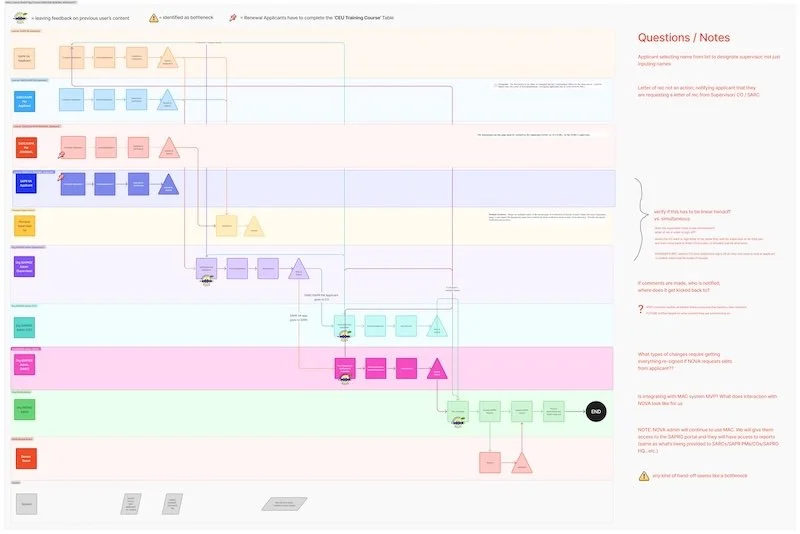
My co-designer and I began by immersing ourselves in the current SAPRO workflow. Specifically, we reviewed their process documentation and simulated the application steps multiple times in an effort to analyze the application flow firsthand. This deep dive into research and the existing state allowed us to map the end-to-end process and pinpoint bottlenecks causing inefficiencies, delays, and added costs.
From this analysis, we identified key areas of opportunity for streamlining and optimization. We then collaborated with the lead engineer and project manager to validate technical feasibility. Then, we engaged with the customer to ensure alignment on priorities and objectives. This exercise not only highlighted where improvements were needed but also served as the blueprint for defining governing business rules that guided the entire design process.
Wireframes
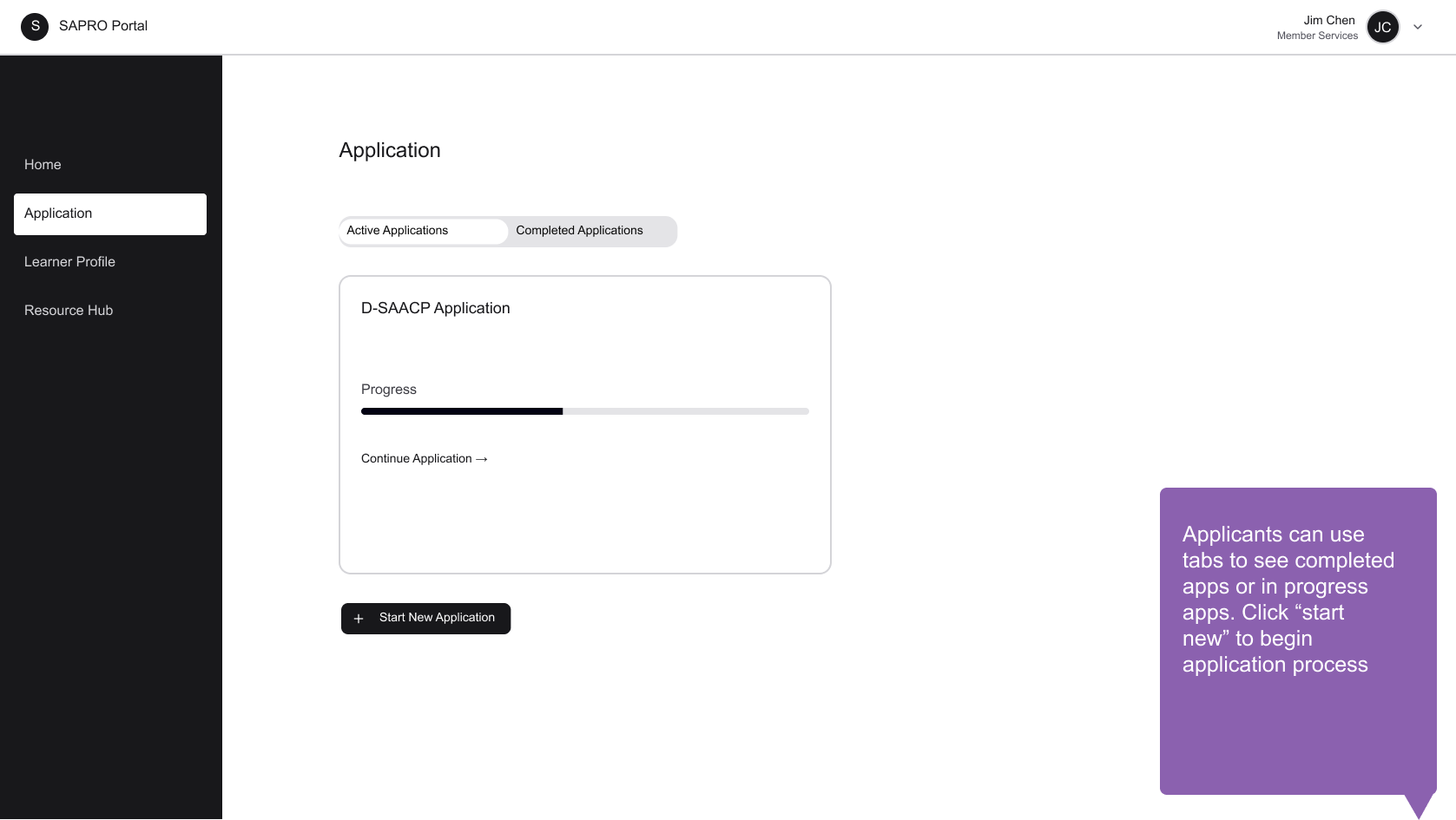
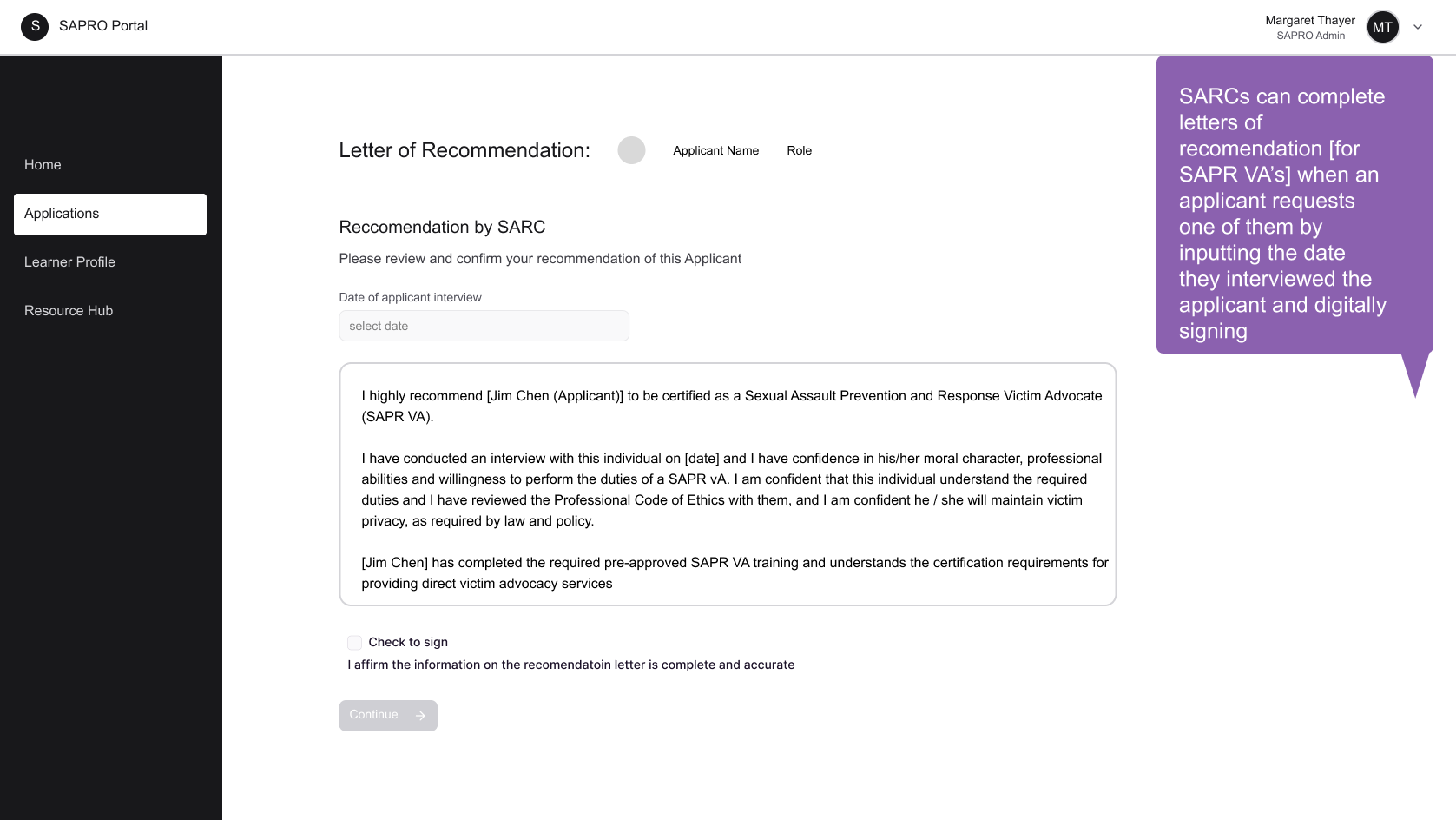
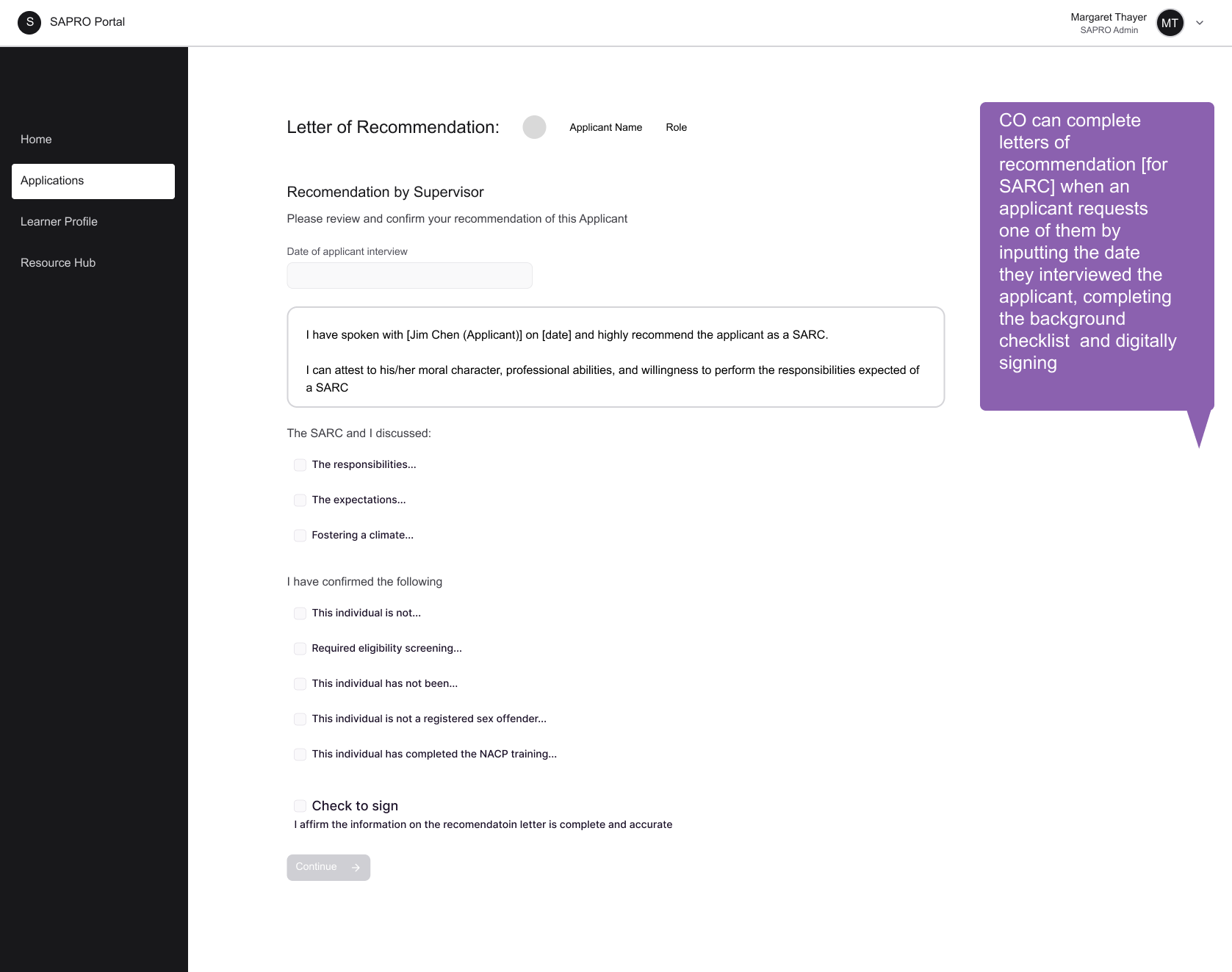
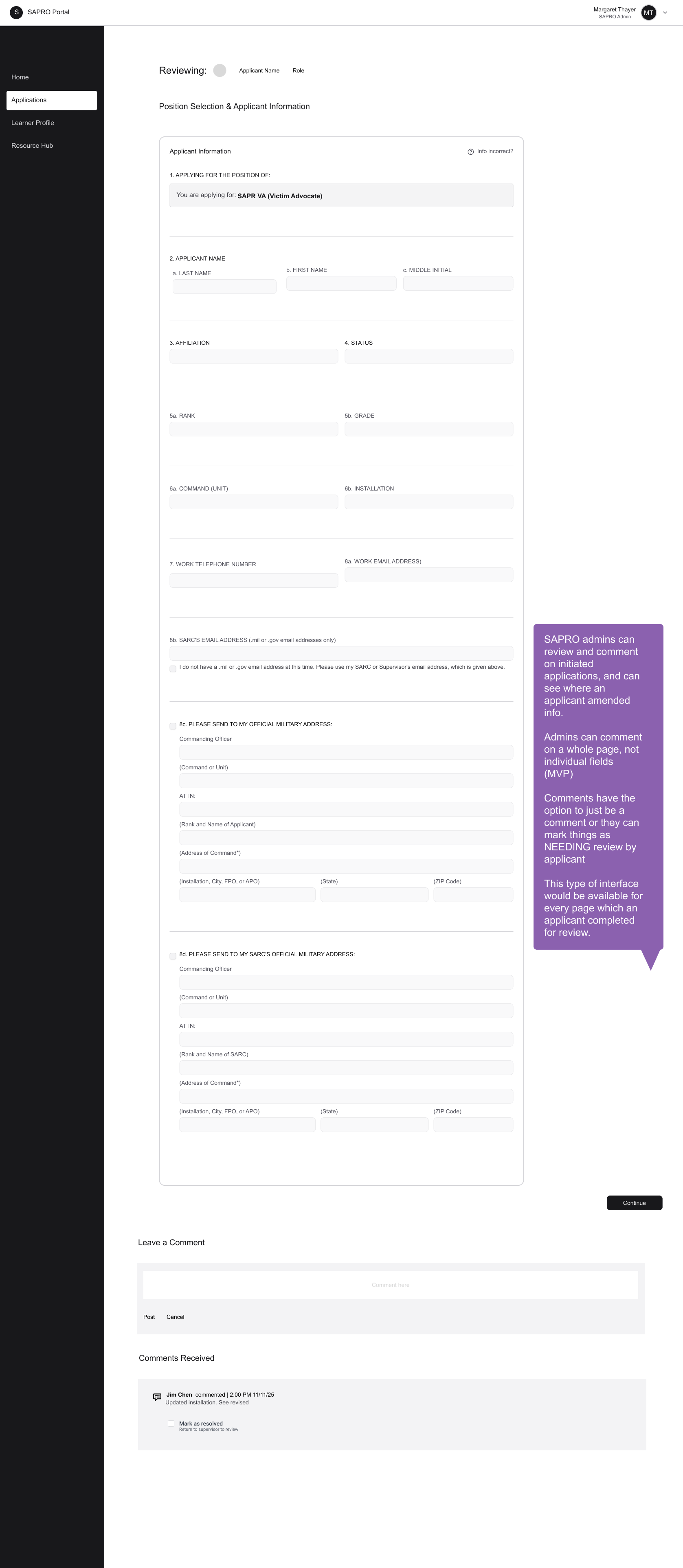
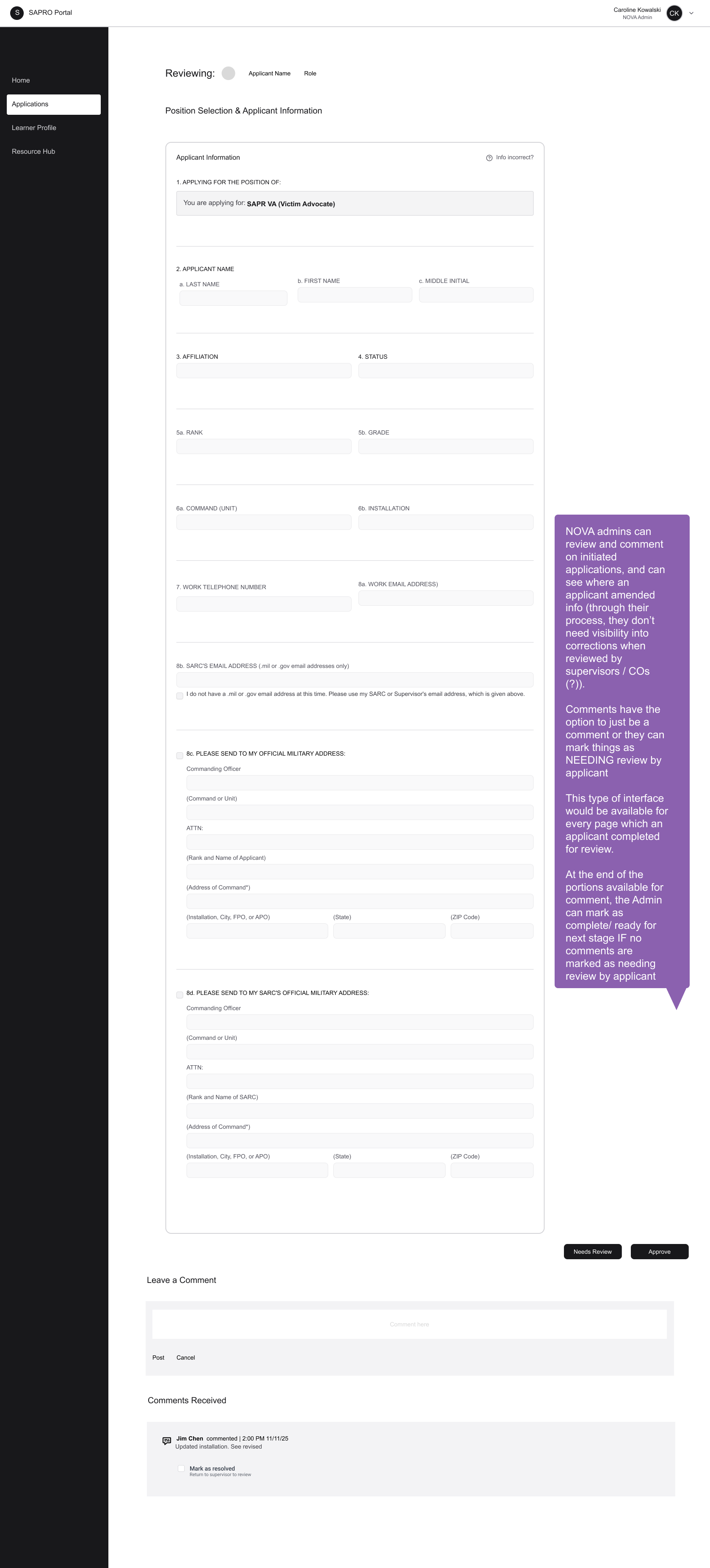
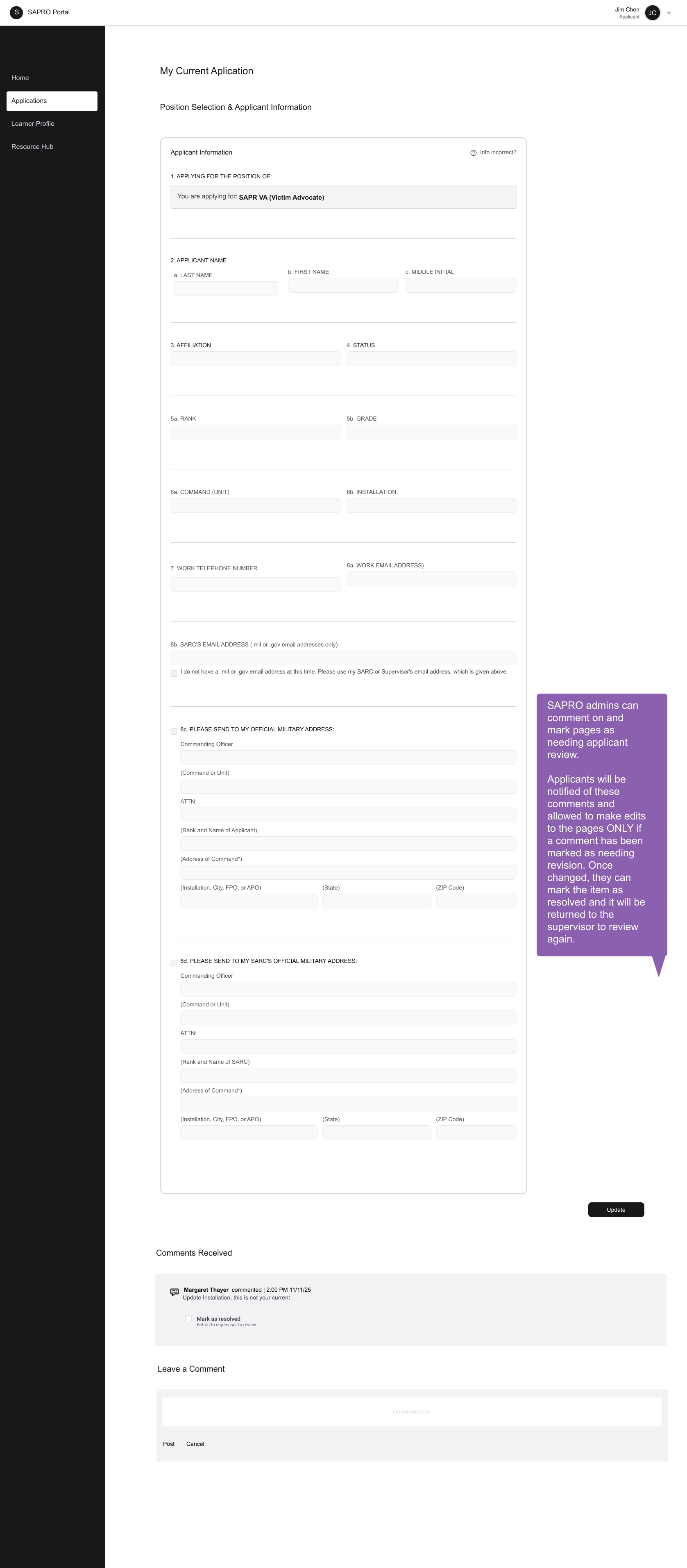
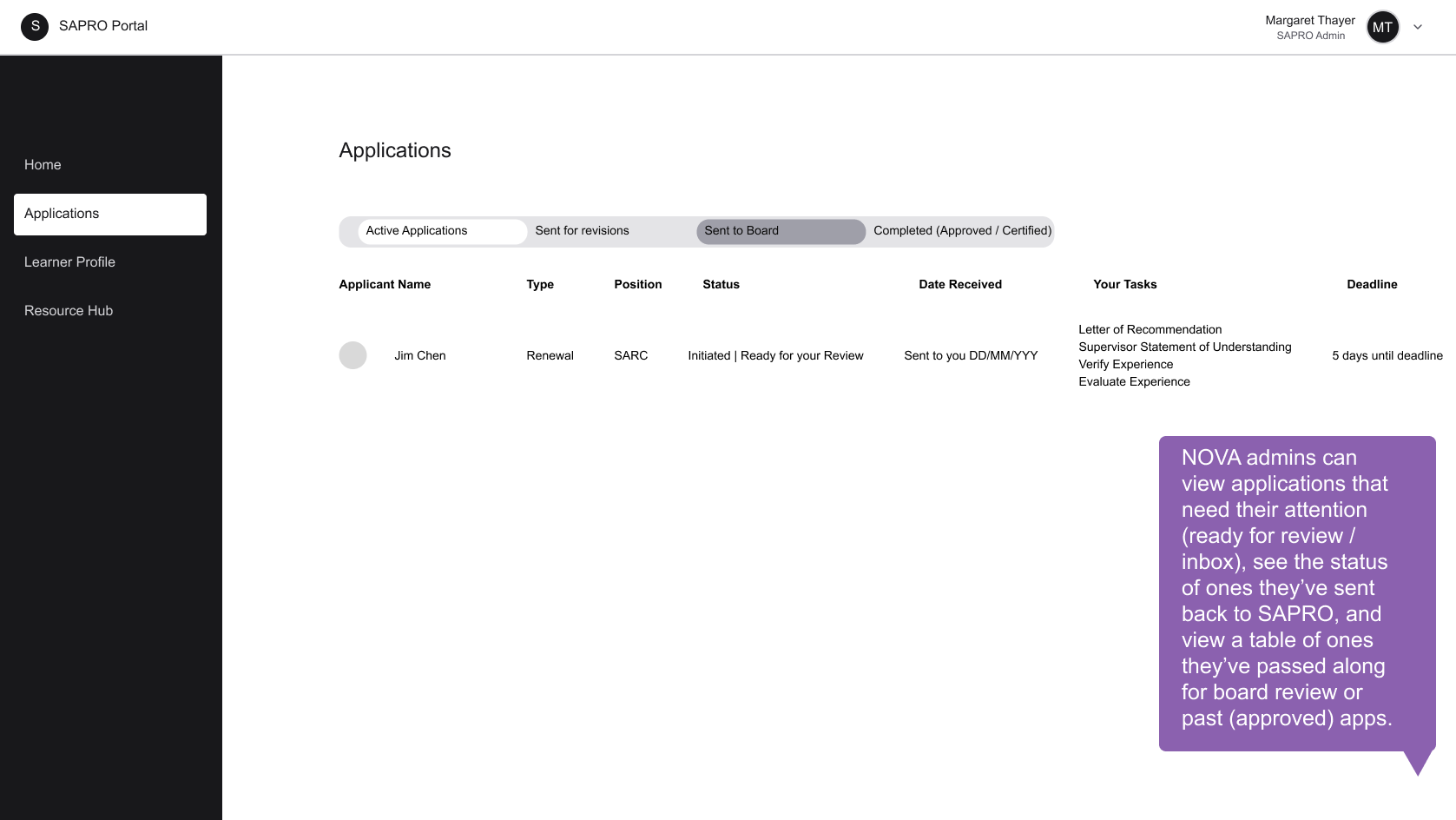

During the wireframing phase, the other Designer and I combined digital tools like FigJam with pen-and-paper sketches and AI platforms such as Loveable to explore solutions from multiple angles.
To ground the design in real user needs, we walked through the existing PDF application as if we were an applicant, mapping all required fields and information flows. This exercise informed iterations aimed at reducing user fatigue and minimizing errors, while also envisioning alternative methods for collecting applicant data, supervisor feedback, and improving transparency across the process.
Collaboration with Engineering and Project Management teams was critical, helping surface technical constraints and requirements early, and guiding design decisions that anticipated and mitigated potential application errors. This process was completed within a 2 week timeframe and effectively informed the rest of the design and production process after receiving positive and constructive client feedback.
Major Screens
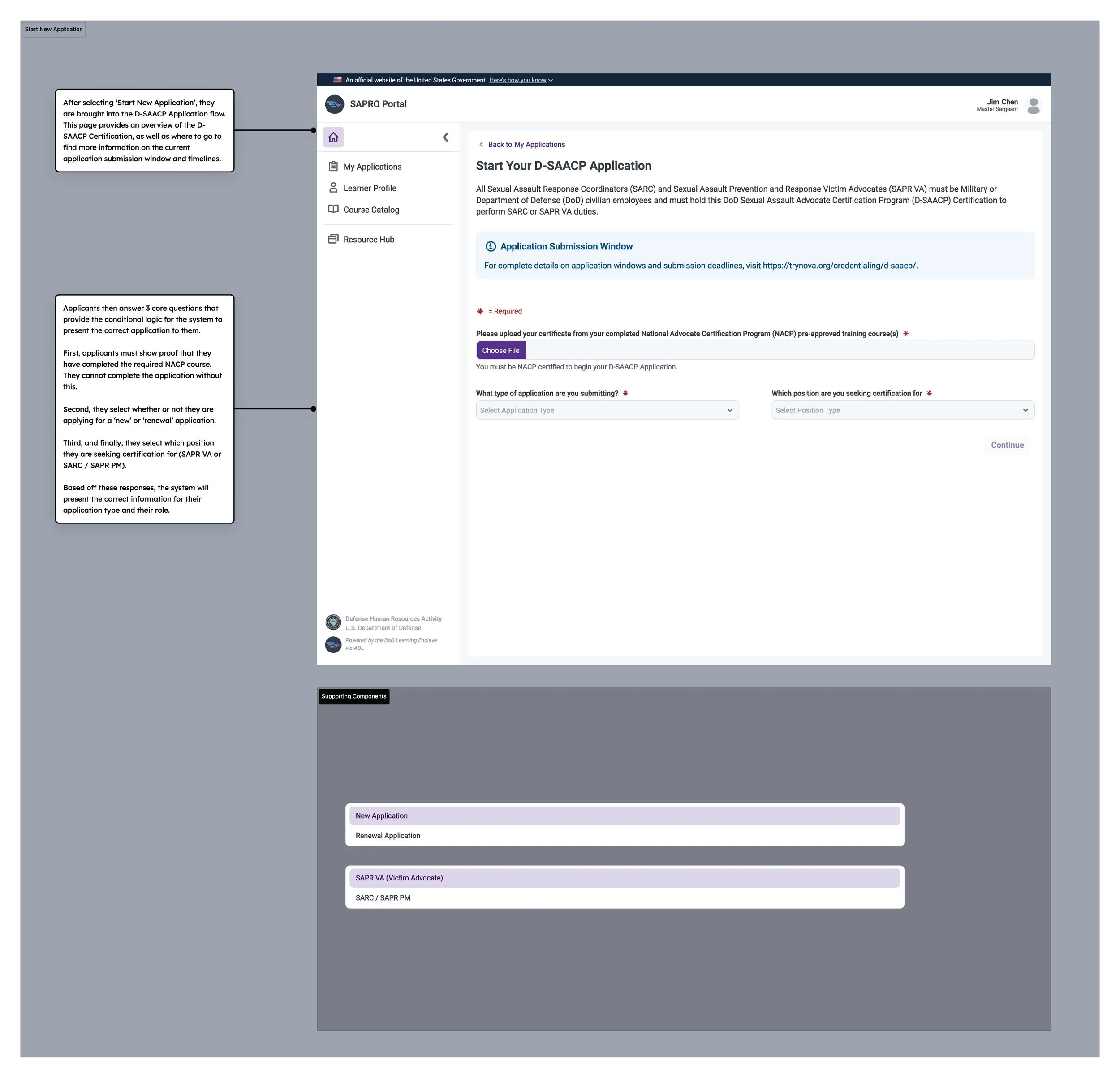
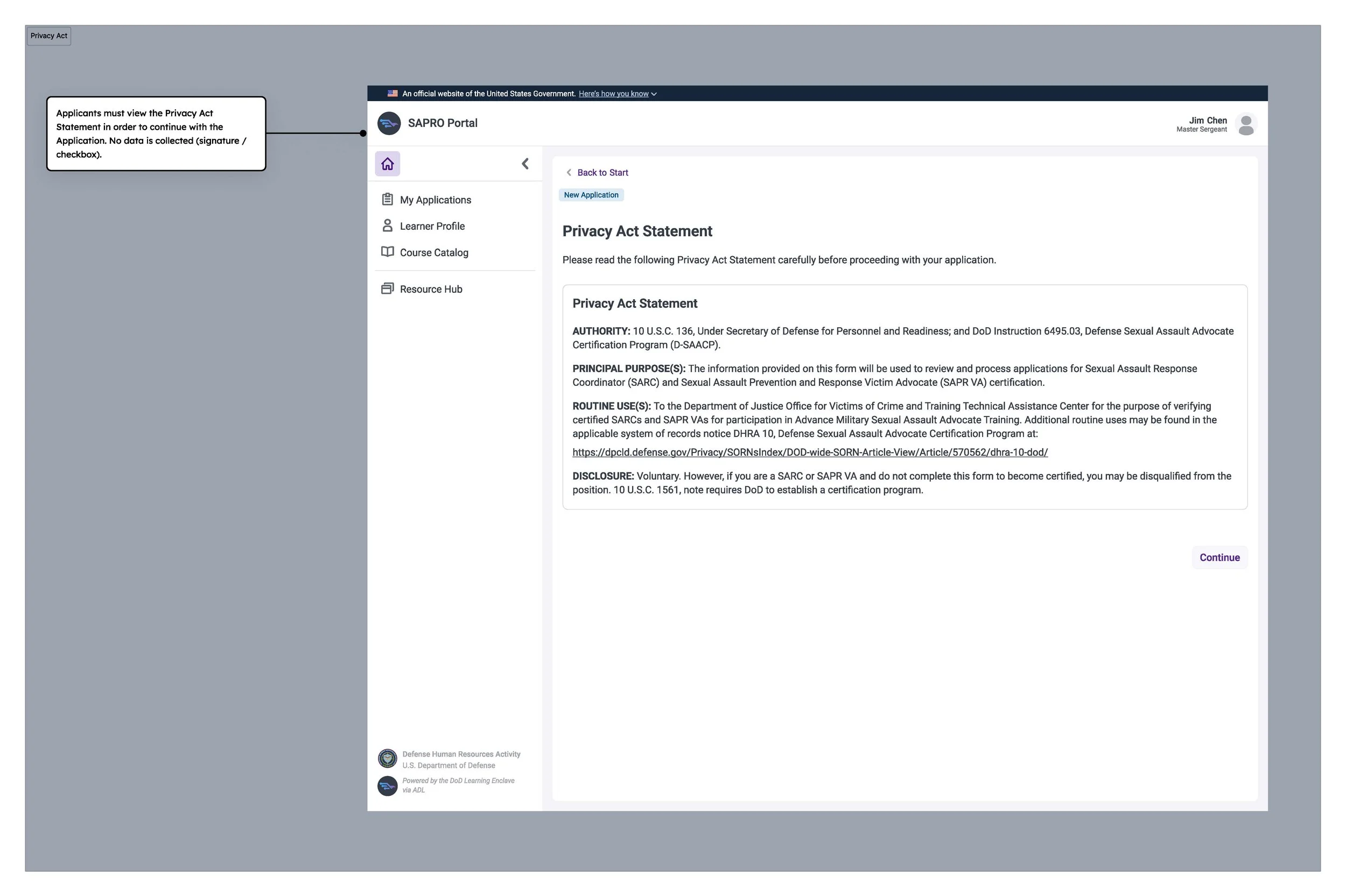
Once wireframes were finalized and approved internally, my co-designer and I transitioned to creating high-fidelity mockups under a tight one-week timeline. Leveraging our established design system, we began by auditing existing components to determine which could be reused for each feature. Our approach was workflow-driven—starting with the application intake process and focusing first on the applicant persona. We scoped the design to cover how applicants would access, complete, and track their application, aligning each step with previously defined requirements.
To accelerate delivery, we divided screens/design components between my co-designer and I, prioritized component reuse, and built new components only when necessary—ensuring they were designed for future reusability. Daily stand-ups with engineering allowed us to manage scope, validate technical feasibility, and incorporate rapid feedback. This iterative cycle included frequent prototyping, usability heuristic checks, built-in 508C accessibility compliance, and A/B testing. As new workflows were completed, we continuously revisited earlier ones to integrate agile updates and adapt to emerging requirements.
Footnote: Data presented is representational in order to preserve and protect PII. The live system resides in a secure Platform One IL-4 environment and cannot be shared or distributed. The referenced D-SACCP application is a public document, but due to security protections, further documentation of this project is not available at this time.